We rarely think about our water heaters until the absolute worst happens: stepping into a freezing shower on a Monday morning or discovering a puddle creeping across the utility room floor.
Your water heater works quietly behind the scenes 24/7 to supply hot water for your showers, dishwashers, and washing machines. Like any hardworking appliance, it requires a little TLC to keep running efficiently.
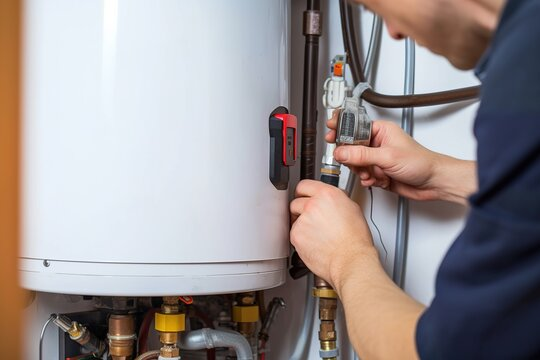
Inside the Tank: Key Parts of a Standard Water Heater
To understand how to maintain your water heater, it helps to know what’s actually going on inside that large metal cylinder. Whether you have a gas or electric model, standard tank water heaters share several core components:
- The Tank: A heavy-duty steel outer shell lined with glass or porcelain to protect against rust, designed to hold 30 to 50+ gallons of water under pressure.
- Anode Rod: Often called the “sacrificial rod,” this steel-core rod coated in aluminum, zinc, or magnesium sits inside the tank. Its sole job is to attract corrosive elements in the water so they eat away at the rod instead of your tank’s interior walls.
- Dip Tube: Cold water enters the tank through this tube, directing it straight to the bottom so it can be heated. If a dip tube cracks or breaks, cold water mixes with hot water at the top, causing your hot water to run out prematurely.
- Temperature and Pressure (T&P) Relief Valve: A critical safety device. If the temperature or pressure inside the tank climbs to dangerous levels, this valve automatically opens to release the excess pressure, preventing catastrophic tank ruptures.
- Burner and Pilot Assembly (Gas) / Heating Elements (Electric): Located at the base (gas) or inside the walls (electric), these components provide the actual heat energy needed to raise the water temperature.
- Thermostat: The control dial (usually found on the exterior) that allows you to set and regulate the water temperature.
- Drain Valve: Located near the bottom of the tank, this valve allows service technicians (or homeowners) to drain the system for maintenance or replacement.
4 Essential Maintenance Tips to Extend Your Water Heater’s Lifespan
Most water heaters have a lifespan of 8 to 12 years. Skipping routine maintenance can cut that number in half and drive up your monthly energy bills. Implement these habits to protect your equipment:
1. Flush the Tank Annually
Over time, minerals (like calcium and magnesium) present in tap water settle at the bottom of the tank and form a thick sediment layer. When the burner heats the tank from below, this sediment acts as an insulation barrier, making the unit work harder, overheat, and degrade faster. Flushing the tank once a year clears out this buildup.
2. Inspect the Anode Rod Every 1–3 Years
Because the anode rod “sacrifices” itself to prevent rust, it wears down over time. Once the rod is completely eaten away, the water will start corroding the actual steel tank. Checking and replacing your anode rod when it becomes heavily pitted can easily double your water heater’s lifespan.
3. Test the T&P Relief Valve
Safety valves can occasionally stick or fail due to mineral buildup. Once a year, lift the lever on the T&P valve slightly and let it snap back. You should hear a short burst of water through the discharge pipe. If nothing happens or it continues to leak, the valve needs immediate replacement.
4. Optimize the Temperature Setting
Many water heaters come factory-set to 140°F (60°C). Lowering your thermostat to 120°F (49°C) is plenty hot for most households, prevents scalding risks, slows down mineral scale accumulation, and reduces standby energy loss.
Warning Signs Your Water Heater Needs Professional Service
Even with great maintenance, parts eventually wear out. Keep an eye out for these red flags that mean it’s time to call in a professional:
- Lukewarm or No Hot Water: Usually points to a failing heating element, a broken dip tube, or a pilot light issue.
- Strange Noises: Popping, rumbling, or banging sounds coming from the tank indicate a heavy layer of hardened sediment boiling trapped water underneath.
- Discolored or Rusty Water: If your hot water looks brownish or smells metallic, your anode rod may be completely spent, or the inside of your tank is beginning to rust.
- Pooling Water or Leaks: Any moisture around the base of the tank or dripping from fittings requires immediate attention to avoid major water damage.
Need a Hand With Your Water Heater?
Whether you need a routine flush, a replacement anode rod, or expert emergency service for a failing unit, keeping your home’s plumbing and mechanical systems in top shape is essential. For expert help across the Riverbend and Metro-East regions, reach out to the team at Paulovich Mechanical at 618-656-9412 to schedule an inspection today!